Ugandan Youth Encouraged to Combat Human Trafficking at Symposium on Human Trafficking 2026
By Mugabe Chrispus Murenza, YPMP Mentee
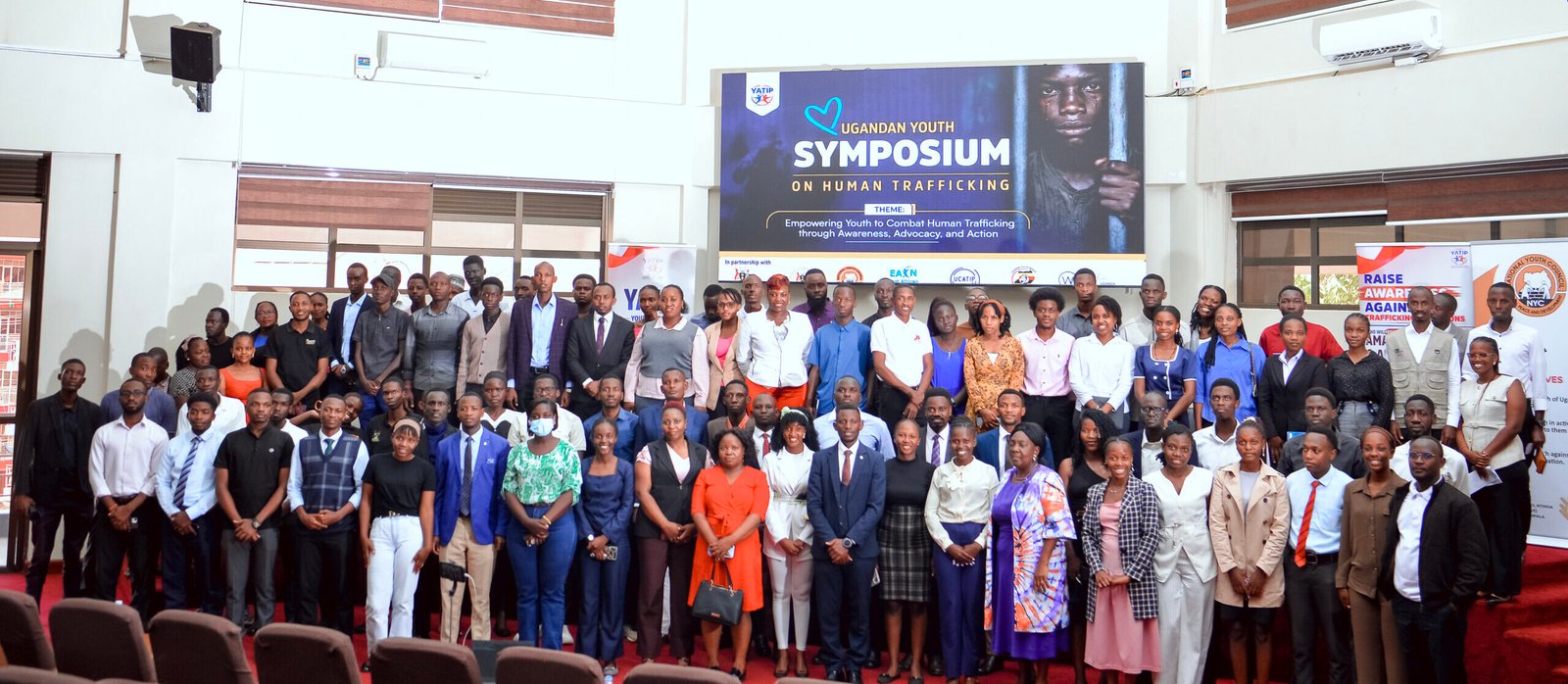
On Monday, 27th July 2026, young leaders, activists, policymakers, and development practitioners filled the Makerere University School of Public Health Auditorium for the Ugandan Youth Symposium on Human Trafficking 2026. The theme was “Empowering Youth to Combat Human Trafficking through Awareness, Advocacy and Action.”
The symposium was organized by Youth Against Trafficking in Persons (YATIP), the Uganda Youth Senate, and the East African Youth Network. Partners included the Coalition Against Trafficking in Persons Uganda (UCATIP), the Ministry of Internal Affairs, and the National Youth Council. It was more than a conference. It challenged young people to move beyond awareness and take an active part in preventing a crime that keeps growing in complexity and scale.
Digital Vulnerabilities and the Changing Face of Trafficking
One of the most thought-provoking sessions came from Caroline Owashaba, CEO of UCATIP, who showed how trafficking has evolved with technology. Traffickers now exploit social media, artificial intelligence, and fraudulent online recruitment to target young people looking for jobs and educational opportunities.
She pointed to the rise of digital job scams across Uganda and East Africa. Young people are lured by ads promising careers in IT, hospitality, customer service, and marketing. What looks like a genuine opportunity often ends in cyber scams, identity theft, forced labour, or other abuse.
Her message resonated:
“Human trafficking is not only a human rights issue but also a labour migration and cyber security challenge. It demands coordinated action.”
Fighting trafficking today takes stronger laws, but also better digital literacy and informed decision-making among young people.
Why Young People Are Vulnerable
Speakers identified several interconnected factors including; youth unemployment and poverty, limited digital literacy and online safety awareness, and the pursuit of better economic opportunities through risky migration pathways.
Caroline urged young people to use their “sixth sense”: verify opportunities before accepting offers abroad, register with Ugandan embassies where appropriate, and use only legitimate government channels and licensed recruitment agencies.
Prevention begins long before exploitation does. It starts with informed choices, critical thinking, and reliable information.
Priorities for Action
Speakers agreed that ending trafficking is a collective responsibility. Several priorities emerged.
Government and policymakers
- Strengthen laws on technology-enabled trafficking
- Improve regulation and oversight of online recruitment platforms
- Invest in youth employment and economic opportunities
- Enhance regional and international cooperation
Youth organizations
- Generate evidence-based research
- Expand nationwide awareness campaigns
- Support survivors through advocacy and rehabilitation
Communities and families
- Promote safe migration practices
- Encourage open conversations about trafficking risks
- Report suspicious activity to the authorities
Young people
- Verify employment and scholarship opportunities
- Protect personal documents and digital identities
- Seek information from legitimate institutions before making migration decisions
Voices of Courage and Responsibility
Several speakers challenged participants to move from awareness to action.
Niome Atwine of Willow Uganda said: “Awareness without action fades quickly. It needs a generation determined to fight the problem.”
Damon Wamara asked young people to consider their generation’s legacy: “Every generation is remembered by the battles it chooses to fight. Ours has inherited the battle of dignity—at the heart of that battle is human trafficking.”
They urged youths not to become a generation that had technology but lacked compassion, or one that recognized exploitation and stayed silent. Instead, the youth were called to choose courage over comfort, responsibility over indifference, and justice over silence.
My Reflection
Listening to the discussions, I realized trafficking is far more complex than I had understood. It is no longer limited to illegal border crossings or criminal networks in the shadows. It has adapted to the digital age, where a social media ad, an unsolicited email, or an attractive online job offer can be the entry point to exploitation.
I also left with a renewed appreciation for partnerships. Governments, civil society, educational institutions, communities, and young people each have a role. No single institution can end trafficking alone, but together we can build resilient communities where young people have the knowledge, confidence, and opportunities to make informed choices.
Conclusion: A Generation’s Call to Courage
The symposium was more than an event. It was a call to action. Trafficking is not a distant crime but a present reality, increasingly fueled by digital platforms, unsafe migration, and systemic vulnerabilities.
It challenged government, civil society, communities, and especially young people to respond with courage, compassion, innovation, and collective responsibility. Awareness must lead to advocacy, advocacy must inspire action, and action must create lasting change.
When future generations look back, may they say ours was the generation that chose courage over comfort, responsibility over indifference, and justice over silence. The fight against trafficking cannot wait. It begins today, with informed choices, united communities, and young leaders willing to stand for the dignity and freedom of every person.